Japan meets Gavignano
Gavignano, near Rome, Italy · free entry
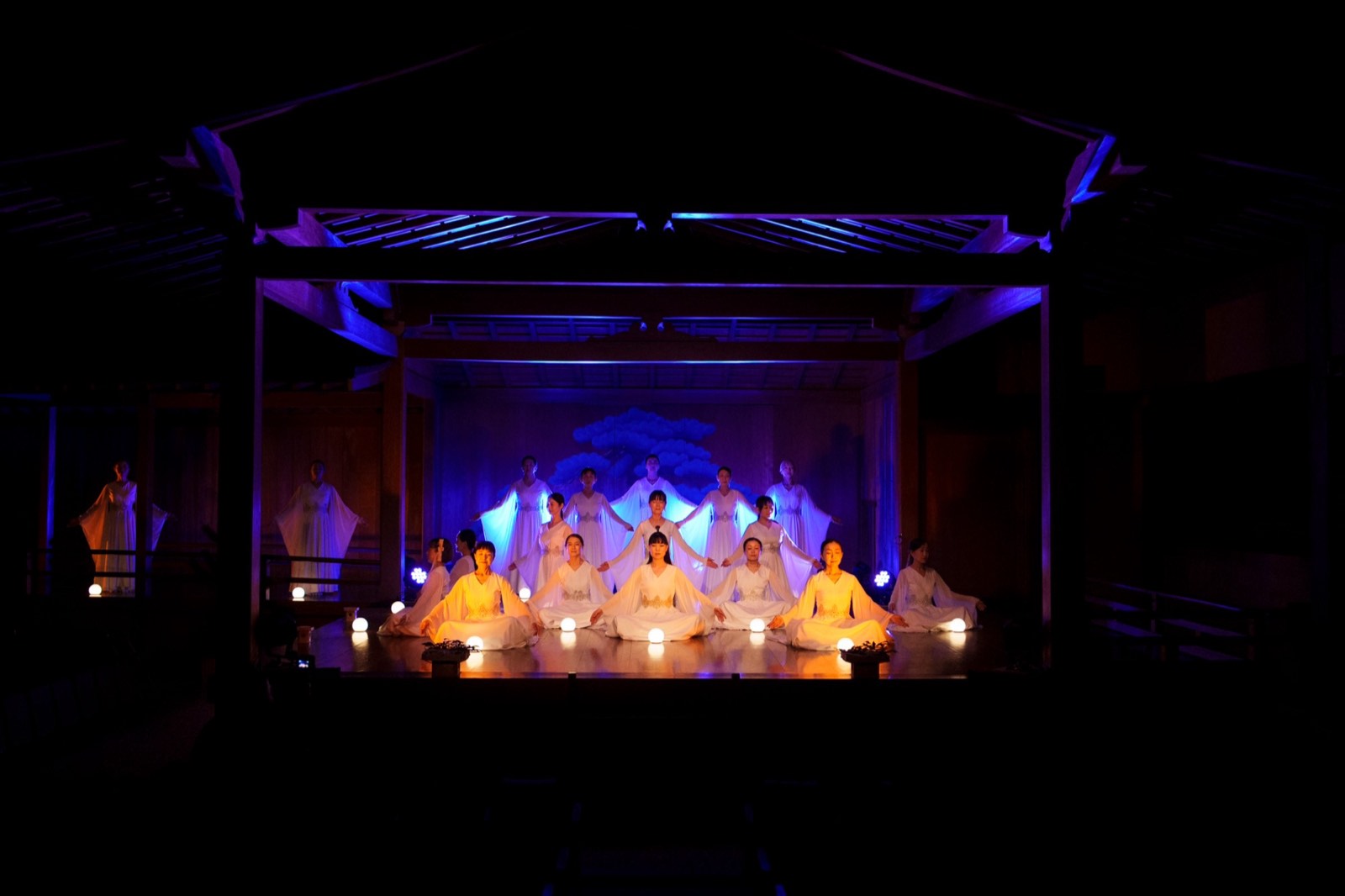
A Japanese dance that embodies a sense of the divine cherished in Japanese culture since ancient times — and for ten years, dedicated at shrines across the country.
In Japan, people have long brought offerings to the divine: sacred sakaki leaves, sake, rice, music. Meisoumai is one of these offerings — given as a dance.
Watch the dancers, and you may notice them growing quiet, the way a lake grows still before dawn. The self is set gently aside. What moves instead comes from somewhere deeper — a pure, wakeful awareness, where the divine within and the world around feel, for a moment, like one.
In Japanese, the word for prayer, inori, is said to come from i wo noru: to declare a beautiful intention. So a prayer can be a quiet promise: to say, with gratitude, this is how I will live — and then to walk toward that life, one breath at a time.
What you witness is the deep purity of Japanese spirituality, made visible — and the harmony and beauty that grow from it.
Again and again, people who have watched it say the same thing: that the air seems to grow clearer, as if the space itself were being purified.
In Japan we say that a spirit lives in words — kotodama. Meisoumai holds that a spirit also lives in form. Bring your palms together. Wait a moment. If your heart grows a little stiller, perhaps the katadama of prayer has come to rest in your hands. Every dance has its own story and its own forms, and as people learn them — even people who have never danced before — mind and body begin, quietly, to settle into one.
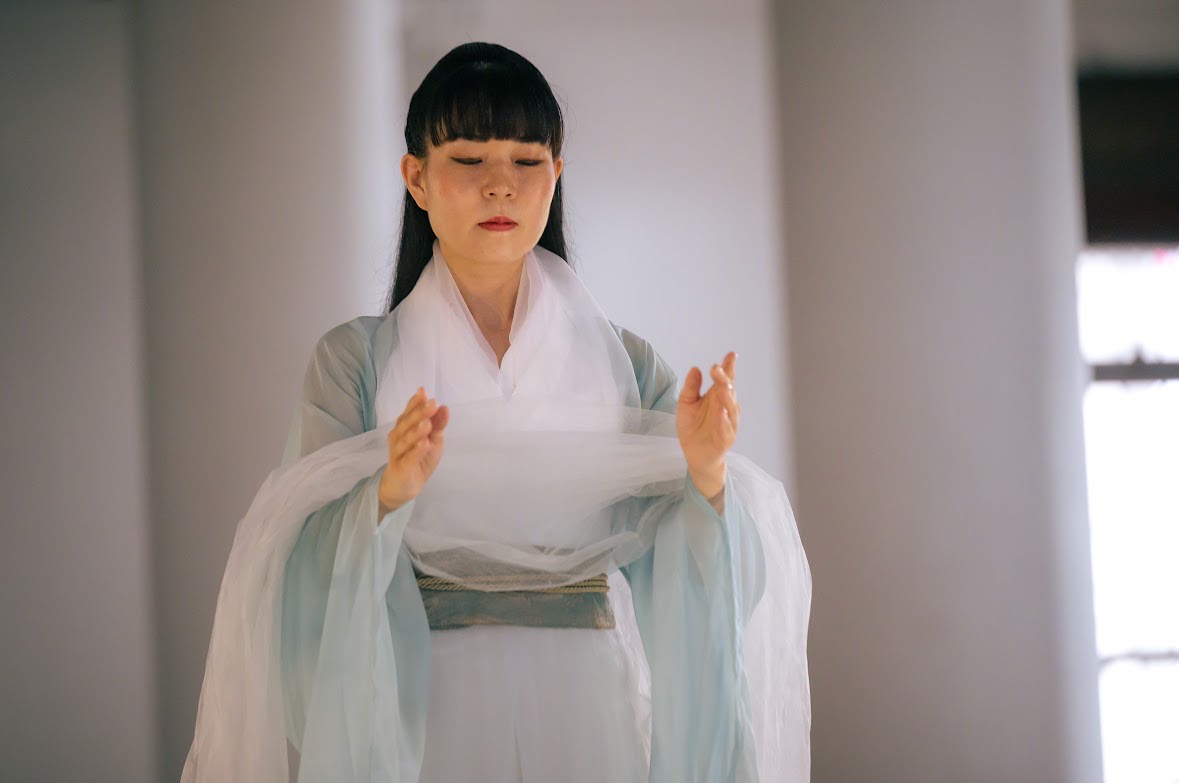
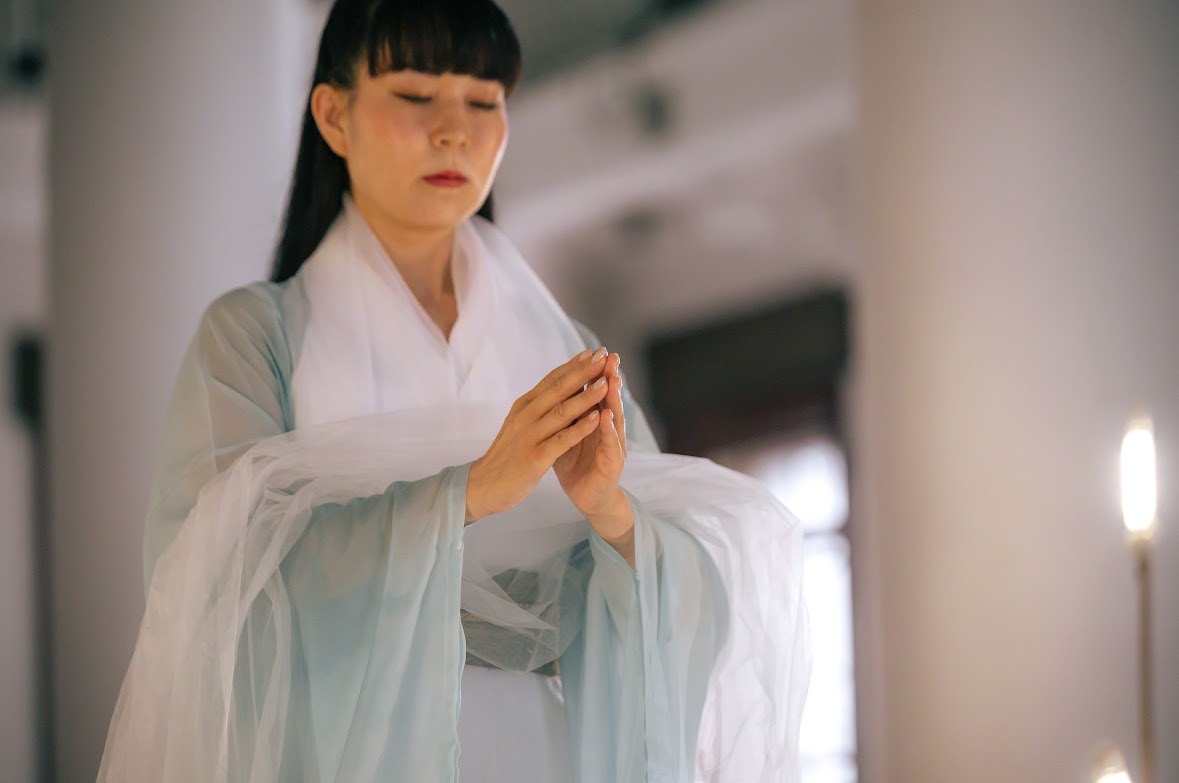
We dance to share something that lives in every one of us — something pure, tender, and easily forgotten. We call it purity, and it rests on three things that cannot be pulled apart: three, and yet one.
A body that stands upright and unforced — at ease in its own alignment.
A heart that is soft, and in no hurry.
Harmony and trust with those who dance beside us.
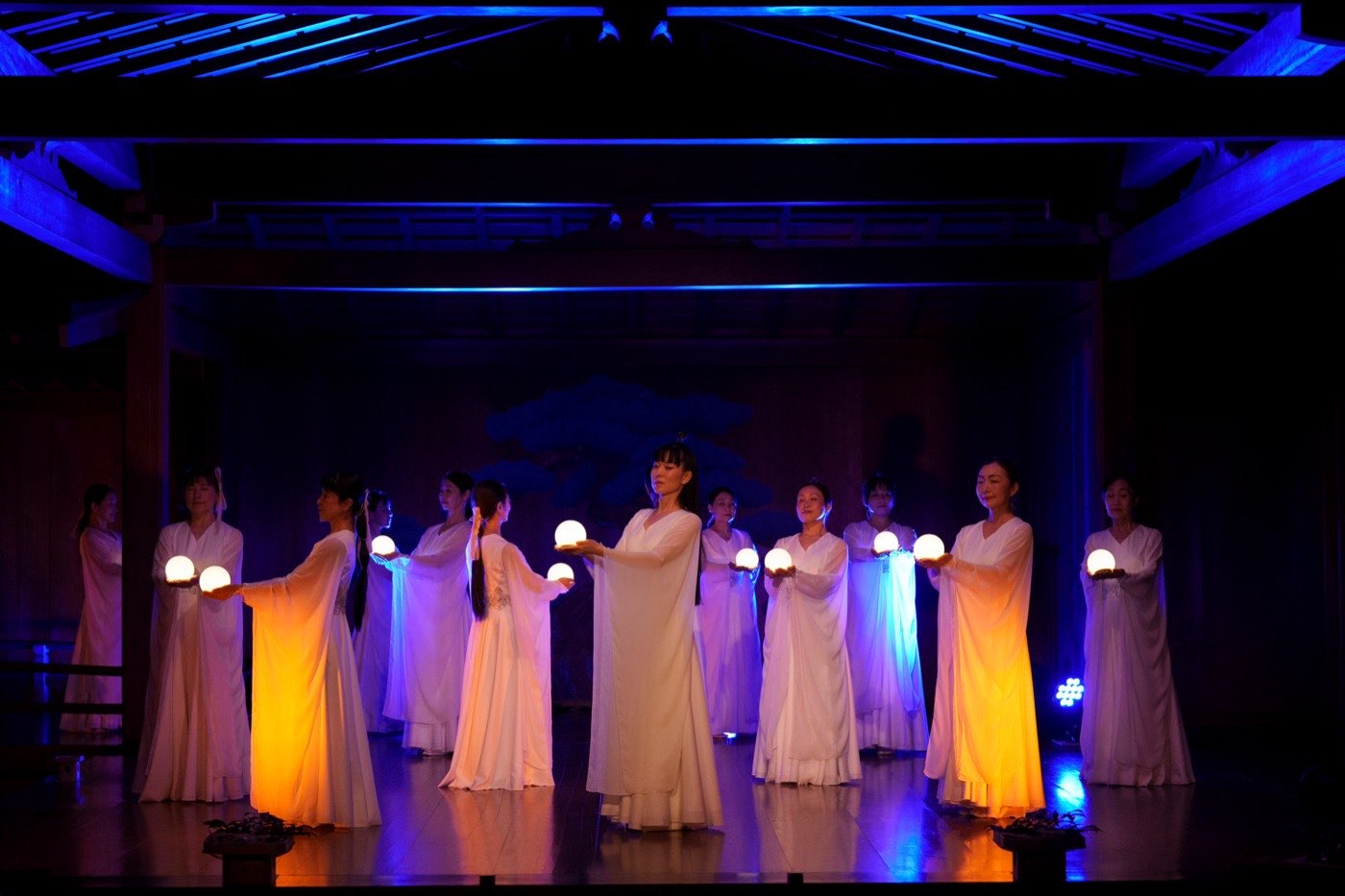
These three are carried far beyond the stage — into how we stand, how we listen, how we meet the people around us. Through the quiet practice of each day, through dedications of gratitude at shrines and temples, and through the stage, where everything comes together, Meisoumai gently becomes a way of living.
Gavignano, near Rome, Italy · free entry
Opening ceremony and stage performance · Teatro Politeama Garibaldi, Palermo, Sicily
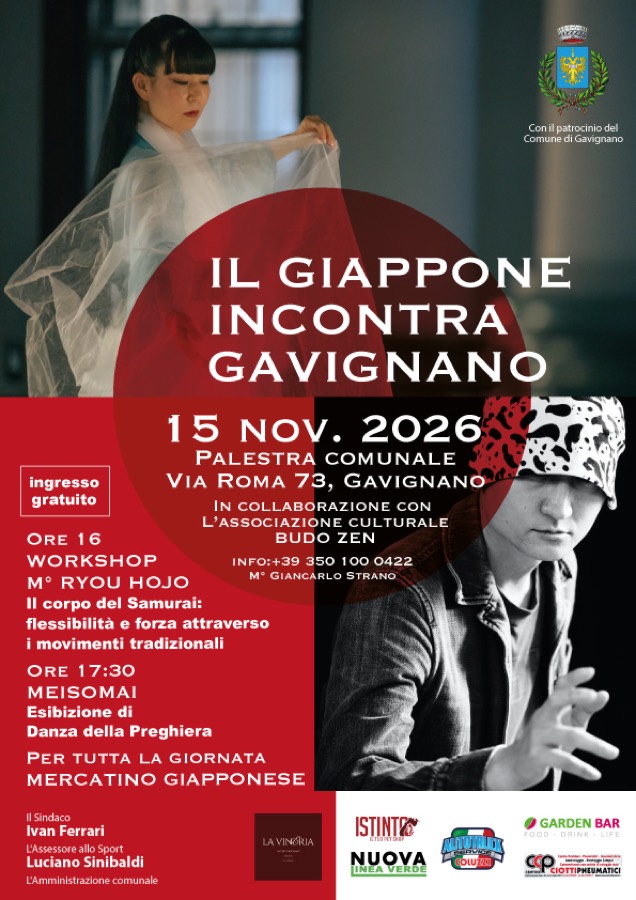
Sunday 15 November 2026
Palestra comunale, Via Roma 73, Gavignano (Rome)
A day of Japanese culture, under the patronage of the Municipality of Gavignano and in collaboration with the Budo Zen cultural association. Free entry.
Information: +39 350 100 0422 (M° Giancarlo Strano)
Japan Week returns to Italy after eight years, in the year marking the 160th anniversary of diplomatic relations between Japan and Italy.
Meisoumai performs with Amane-ryū (Ryou Houjoh) on both evenings at the Teatro Politeama Garibaldi in Palermo: a sacred dance of prayer for world peace, alongside a martial-arts performance that weaves together sword, staff (jō) and dance.
According to the official website, entry is free with registration, but both evenings are now fully booked (as of 29 October). The links below lead to the waiting list.
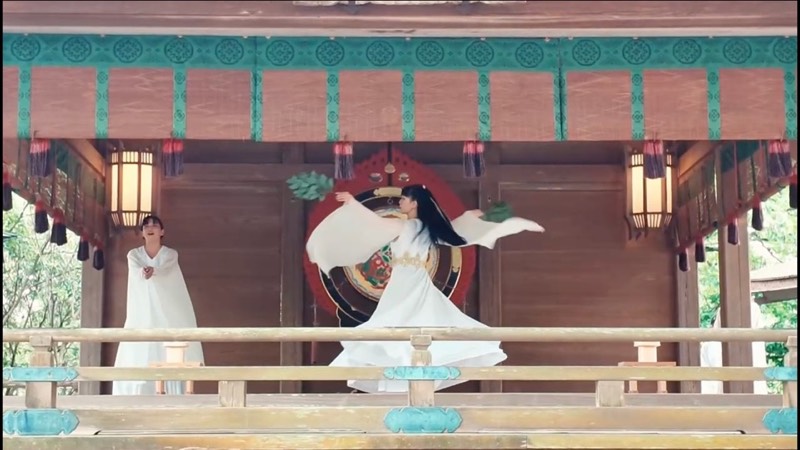
The tenth-anniversary dedication at Kotohira-gū (Konpira-san) in Kagawa, the shrine of Kaori’s hometown.
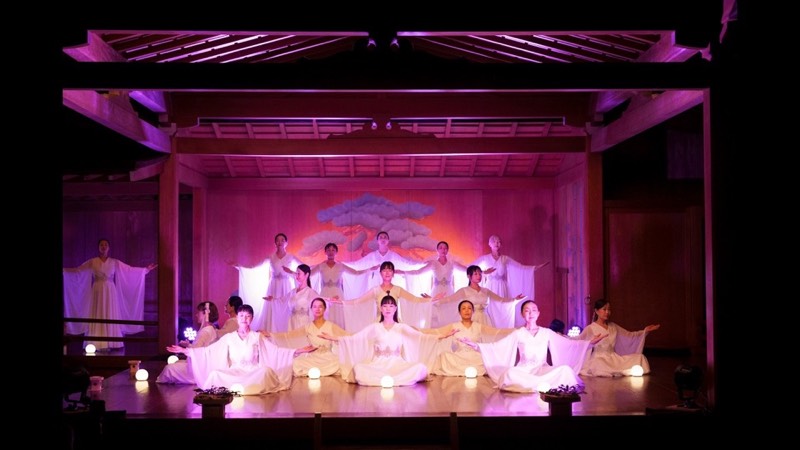
Umewaka Noh Theatre, Nakano, Tokyo
Opens on YouTube
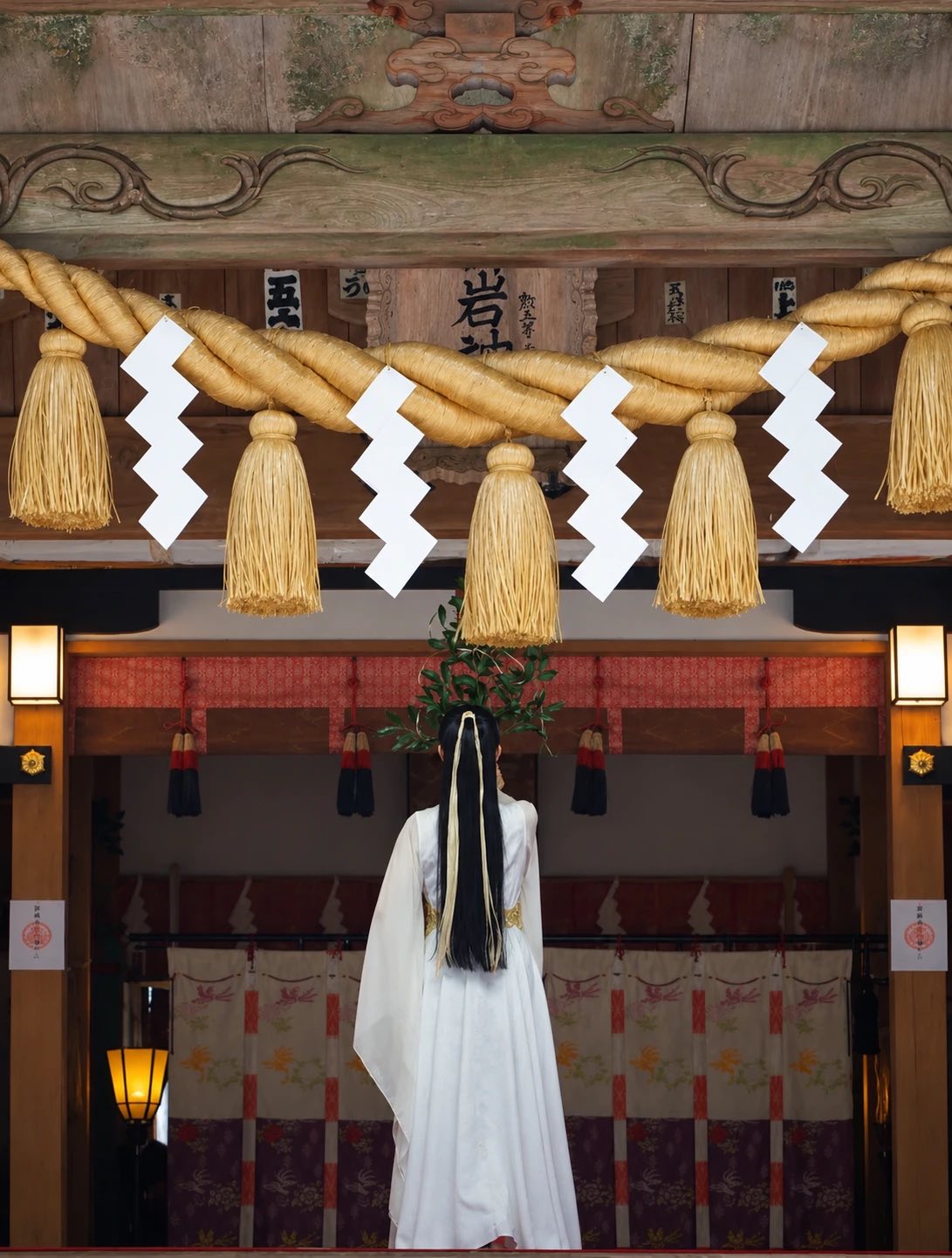
A Journey of Prayer and Dedication — Meisoumai
Film director Katsuyuki Miyabe set out to keep something that usually lasts only a moment: the forms of Meisoumai, and the people who give them life. He called what he saw “a figure we wish to leave for a thousand years,” and the finished film was itself dedicated to Dewa Sanzan Shrine.
The documentary is in Japanese, without subtitles. Recordings of three past Inori Performances are also available; they need no translation and can be enjoyed by anyone. All are available for purchase (¥3,000 per title; credit cards accepted). To order, please contact us.
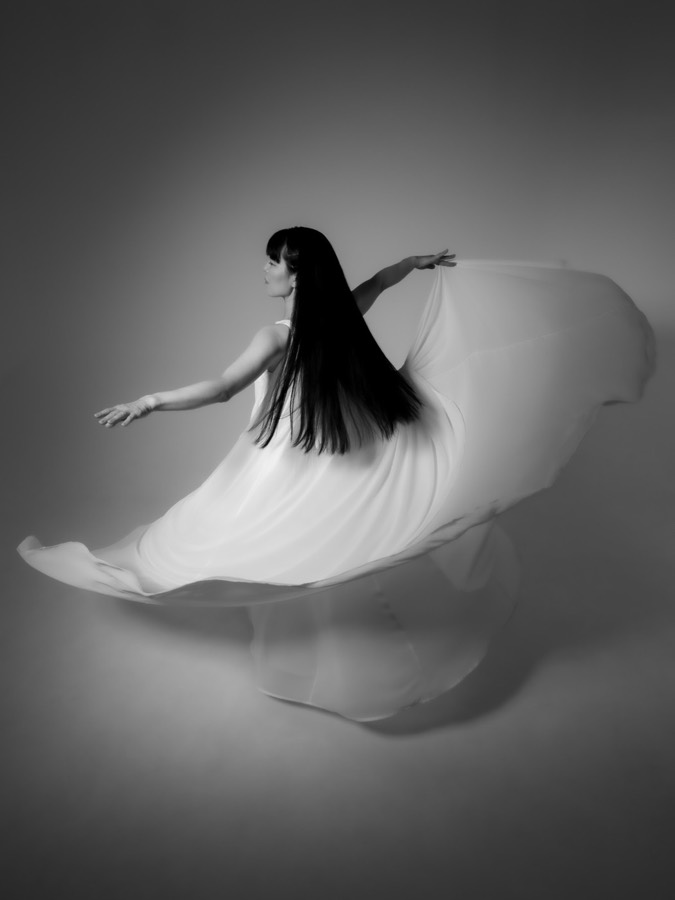
Kaori believes that every person carries something beautiful within — and she has made a dance to bring it into the light.
As the founder of Meisoumai, she creates dances in which simple, graceful forms become prayer. She has danced in dedication more than fifty times at shrines and temples across Japan, often at festivals and sacred rites, and has brought this quiet, luminous work to Noh stages in Tokyo and to Japan Week in the United Kingdom and Italy.
Her path is an unusual one. Before she ever danced, she studied law at Waseda University, built her own company — featured by NHK and Japan’s national newspapers — and spent years as secretary and business manager to Marie Kondo, author of The Life-Changing Magic of Tidying Up, from her first book to her move to the United States. She knew how to bring order to a life. At thirty-two, she discovered how to bring stillness to the body. In 2016 she began Meisoumai alone, with a single dance called Hikari — “Light.”
That late beginning became her gift. Kaori understands the body of someone who has never danced, and she has shaped a method — drawing on miko-mai shrine dance, kagura and the martial arts of Japan and China — through which complete beginners rebuild their bodies, step by step, into grace. Many of the women who dance beside her today began exactly where she once stood.
She grew up beneath the long stone steps of Kotohira-gū in Kagawa, where her grandfather’s family kept a shop along the approach. In 2026 she returned there with twenty dancers, to give thanks for ten years of Meisoumai.
In 2025 she received the Prince Higashikuni Cultural Award. She is still learning, still creating new dances — and still dancing, always, as a dedication.
In Japan, a dance can be a gift. A hōnō is a dedication made to the deities of a shrine or temple, and Meisoumai has dedicated its dances more than fifty times, often at festivals and sacred rites. Each one is prepared over months — sometimes a whole year — in quiet conversation with the shrine.
Dewa Sanzan Shrine · Kotohira-gū · Kumano Nachi Taisha · Izumo Taisha · Izumo Daijingū · Ōmiwa Shrine · Tenkawa Daibenzaiten-sha · Oiwa Shrine · Tsubaki Grand Shrine · Myōshin-ji Shunkō-in · Enoshima Shrine · Konnō Hachimangū · and more
Noh theatres in Tokyo (Hōshō, Umewaka) and Kamakura · Denshō Hall & Sakura Hall (Shibuya, Tokyo) · International Happiness Arts Festival · Asia Exchange Music Festival (Kanagawa) · Japan Week (United Kingdom, Italy)
For inquiries to Meisoumai, please use the form below.
Please note that we reply to inquiries from overseas with the help of translation tools. Thank you for your understanding.
If the form does not open or is difficult to use, you are welcome to email us at
meisoumaioffice@gmail.com